U.S. SEC Considers Temporary Crypto Framework to Fuel Innovation While Awaiting Congressional Law
In a surprising shift that could reshape the regulatory landscape for crypto in the United States, the U.S. Securities and Exchange Commission (SEC) is weighing the introduction of a short-term conditional regulatory framework for crypto trading platforms. This move, floated during the SEC’s latest digital assets roundtable in Washington D.C., signals growing urgency within the agency to balance innovation with investor protection.
Acting Chairman Mark Uyeda hinted at the possibility of a transitional rulebook that could ease compliance burdens for digital asset platforms until a full congressional mandate materializes. If implemented, this framework could be a game-changer for exchanges and blockchain innovators who have long argued that the U.S. regulatory environment is stifling progress.
A Turning Point for Crypto Regulation in the U.S.?
Uyeda Proposes “Time-Limited, Conditional Exemptions”
Mark Uyeda, serving as the SEC’s interim chairman, suggested in a recorded statement that the agency might consider conditional, time-limited exemptions for crypto platforms. This provisional relief would allow companies to continue developing blockchain technologies and offering services while regulatory uncertainties are being resolved.
“While the Commission works to develop a long-term solution to address these issues,” Uyeda said, “a time-limited, conditional exempt relief framework… could allow for greater innovation within the United States in the near term.”
This proposal represents a pragmatic shift from the SEC’s traditionally hardline stance, recognizing the unique challenges crypto firms face in trying to operate under a regulatory system built for traditional finance.
The Long Wait for a Legislative Mandate
Congress Still Working on Market Structure Bill
The SEC’s cautious pivot comes in the absence of a comprehensive market structure law from Congress, something crypto advocates have demanded for years. According to several lawmakers involved, such legislation could arrive later in 2025, but actual implementation—complete with agency rulemaking—could still take many more months or even years.
This delay has created a regulatory vacuum in the United States, forcing agencies like the SEC to make ad hoc policy decisions that often leave both investors and entrepreneurs in limbo.
Crypto Roundtable Reveals Internal SEC Dynamics
Peirce Pushes for Innovation and Flexibility
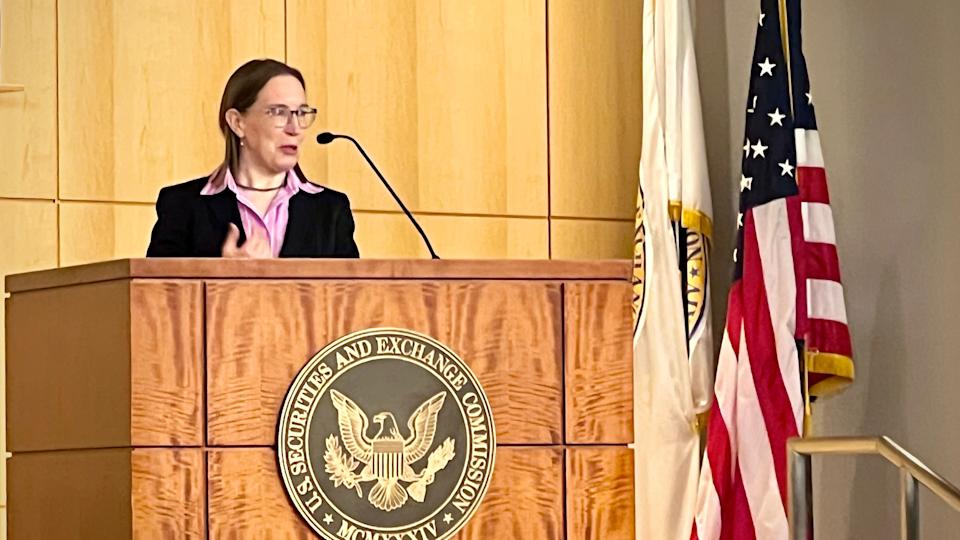
SEC Commissioner Hester Peirce—long a champion of the crypto industry and now head of the SEC’s Crypto Task Force—pressed the agency to ask the right questions:
“What can and should we do in the short term, and what should Congress consider in the longer term to ensure that the regulatory gaps are filled?” she asked.
Peirce’s comments reflect her long-standing belief that crypto innovation must not be smothered by unclear or heavy-handed regulation. She has consistently called for a “safe harbor” period for blockchain projects, a concept that this new interim framework closely resembles.
Incoming Chairman Paul Atkins Poised to Influence Direction
While Uyeda is still at the helm, incoming SEC Chairman Paul Atkins is preparing to take over. Known for his market-friendly approach, Atkins’ arrival could further accelerate regulatory flexibility, particularly if he aligns with Peirce on fostering innovation while laying the groundwork for permanent rules.
Together with Uyeda, Peirce, and Atkins, the Republican majority at the SEC could push for a more permissive stance on digital assets—at least until a clearer legislative mandate arrives.
Skepticism from Democratic Commissioner Crenshaw
Crypto’s Risk Profile Demands Careful Oversight
Not everyone at the roundtable shared the enthusiasm for regulatory leniency. Caroline Crenshaw, the Commission’s sole Democratic member, voiced concern over the risks posed by crypto platforms’ multi-functional business models.
“Crypto trading platforms are unique because they often perform multiple services under one roof,” Crenshaw said. “That’s a high risk of conflicts of interest and risks for investors.”
In traditional finance, those services—clearing, custody, exchange operations—are segregated across distinct entities to reduce conflicts. The crypto industry’s all-in-one model creates operational opacity and elevates the potential for abuse or systemic failure.
Crenshaw’s comments reflect broader Democratic caution toward crypto, often citing recent failures like FTX as evidence of the need for rigorous regulation, not regulatory gaps.
What This Means for U.S. Crypto Firms
Relief Could Open the Door to Aggressive Growth
If implemented, a temporary exemption framework would allow both registered and non-registered firms to experiment more freely, without the threat of enforcement actions for unclear or overlapping activities. This could spark:
-
Accelerated product rollouts
-
Increased venture capital inflows
-
Talent migration back to the U.S. from offshore hubs
It also offers regulatory clarity during a period that has been marked by lawsuits, confusion, and high-profile enforcement actions.
Dual Compliance Paths Could Emerge
The SEC’s roundtable highlighted an emerging desire from firms to combine SEC-regulated activities with non-securities services under one entity—a structure that’s common in crypto but alien to traditional finance.
Any interim framework would need to carefully define compliance boundaries while avoiding the pitfalls that caused previous market failures. This could result in dual compliance paths: one for traditional securities activities and another for broader crypto services.
A Rare Opportunity to Align Policy and Innovation
The SEC’s crypto roundtable signals a potential inflection point in U.S. digital asset policy. While not yet a formal rule change, the possibility of short-term, innovation-friendly regulation opens the door for real progress.
But time is of the essence. Without immediate relief, crypto firms may continue moving offshore, depriving the U.S. of talent, capital, and technological leadership.
If the SEC can balance flexibility with investor safeguards, and Congress delivers on long-awaited legislation, 2025 could mark the beginning of a more coherent, competitive, and innovation-driven U.S. crypto market.
Disclaimer: The above press release has been provided by a third party. We do not verify or endorse the content and will not be responsible for any inaccuracies, claims, or damages arising from the same.